Info/Victims
These pages are dedicated to all individuals who have died of vCJD by blood or medical procedures. Its also dedicated to living victims those affected by and living with the label 'at risk of developing vCJD' due to being given contaminated blood/blood products, cells tissues, organs or by maternal transmission.
Victims their families stories, testimonies, statements and experiences will be posted here so that the public are aware just how many thousands of people in the UK and worldwide continue to be affected by this ticking health time bomb.
Tuesday 19th June 2012
The USA FDA (Food and Drug Administration) will now post a warning on human vaccines about the risk of vCJD transmission. The USA vaccines sourced from human albumen (blood donations) will have similar wording to those already used on blood bags/blood products in the USA. Though the FDA is playing down the risk as ‘remote’ this was the same wording used by the UK Department of Health during the BSE crisis here in the UK and since by government funded experts.
Two young men from Eastleigh near Southampton UK died of vCJD within weeks of each other both had been vaccinated from the same batch of polio vaccines. One of the young male victims was inoculated at school the other at a local college. Their families have been kept completely in the dark about the batch numbers and drug companies who produced these vaccines. The connection between the two young men’s deaths, their proximity to each other and the fact they had received vaccines from the same batch caused a press and public frenzy of concern. The UK Department of Health responded with Ray Bradley as their spokesperson who said ‘their was no connection between the two deaths’. This was the same Ray Bradley a scientist and head of the Central Vet Lab who kept secret the diagnosis of the first recorded case of BSE for nearly two years. See Bradley’s profile and expose on this website.
All victims who have died of vCJD received their childhood adolescent vaccinations; many did not eat school meals or commercially prepared baby food. The one common factor with all the victims were their exposure to vaccines sourced from BSE herds and produced using human material from blood donations.
With the FDA’s admission of this warning does this mean all recipients of vaccines will now be told about this ‘risk’ and choices they may have? Or is this wording on a very small vial of vaccine going to be missed by most patients about to receive their jabs?
When will this same warning be posted on vaccines here in the UK?
For more information about America’s FDA’s warning and information about vaccines check out this link:
www.vaccineriskawareness.com
Revealed: Plans to secretly test 30,000 NHS blood transfusion patients as CJD fears escalate The Mail (5th Feburary 2012)
Those who have had more than 80 blood transfusions 'most at risk'
Experts expect to see 150 cases of vCJD among monitored group
By
Beezy Marsh
Thousands of NHS patients could be secretly monitored by the Government for symptoms of the human form of mad cow disease amid concerns that there could be another wave of infections.
Experts advising the Department of Health believe patients who have received more than 80 blood transfusions are most at risk of developing the fatal brain disease because it can be passed on through infected blood.
They say monitoring these patients could give vital clues about the way the disease develops and is transmitted from person to person and could help work out whether there are likely to be further deaths.
Thousands of NHS patients could be secretly monitored by the Government for symptoms of the human form of mad cow disease amid concerns that there could be another wave of infections
It could also inform officials whether the risk from blood donations needs to be treated more seriously.
But they are considering conducting their surveillance secretly because they fear that informing patients they are at risk and are being monitored will cause unnecessary alarm.
The proposals have been discussed by a powerful panel of leading scientists and doctors, which advises the Government on the disease, known as variant CJD.
The panel's report, published online, suggests conducting 'covert health surveillance' of around 30,000 patients known to have received a high number of blood transfusions.
Experts would expect to see at least 150 cases of vCJD in this group of patients, based on scientific evidence that between one in 4,000 and one in 20,000 of the population may be infected.
Experts believe patients who have received more than 80 blood transfusions are most at risk of developing the fatal brain disease as it can be passed on through infected blood
But this has so far not been seen and may either mean the risk is lower than previously thought, or that it is taking longer for cases to develop.
The 'highly transfused' group includes people suffering life-threatening illnesses including acute leukaemia, aplastic anaemia and the blood disorder thalassemia - as well as those with multiple injuries due to road accidents, or heavy blood loss from aneurysms.
The report acknowledges that following patients without their consent is 'ethically problematic'.
But the panel, a subcommittee of the Advisory Committee on Dangerous Pathogens, has asked the Health Protection Agency to set out the various options for monitoring these patients based on seeking their consent or not.
Chris James, chief executive of the Haemophilia Society, said: 'We are shocked to learn there was ever any suggestion of non-consensual monitoring.
'Given the history of contaminated blood in the 1970s and 1980s, the maintenance of medical ethics is especially important to the haemophilia community.
'Any proposed framework must be reviewed by an ethics committee and open to challenge from individuals and organisations such as ourselves through a formal consultation process.'
Latest official figures show seven NHS patients have died from vCJD after having blood transfusions.
Four are known to have been given blood from people who were infected with fatal vCJD, and the other three had previously had transfusions although it is not known whether the blood was contaminated.
Since the first vCJD cases emerged in the mid-1990s, 175 people in Britain have died from the brain wasting disease, which is linked to eating beef infected with BSE.
Experts predicted that hundreds more could die after receiving blood infected with the disease. But they now admit they are baffled as to why these cases have failed to emerge.
One theory is that some people have a genetic advantage and may only carry the disease without developing symptoms. However, they can still infect others if they give blood.
In one case, a patient is known to have been exposed to vCJD in a blood transfusion and is still alive 24 years later.
At the moment, patients are only informed that they are at increased risk of developing vCJD if they have been exposed to blood from more than 80 donors and if they are about to have brain, spinal or complex eye surgery.
But this threshold may now be raised to only inform patients if they are exposed to 300 or more blood donors because the lack of vCJD cases so far may indicate that the risk of catching vCJD in blood may be lower than previously suspected.
Judy Kenny, of the CJD Support Network, whose husband Deryck died aged 69 in 2003 after being given contaminated blood, said: 'If the authorities are going to do any monitoring, patients should be aware of it.
'There is no grey area - if they are thinking about unconsented monitoring, then it is wrong.'
CJD occurs when nerve-tissue proteins called prions (illustration above) turn 'bad' and gradually destroy the brain
Professor Chris Bunce, science director of charity Leukaemia and Lymphoma Research, said: 'The extent of the risk [of vCJD] to patients who receive regular blood transfusions as part of their treatment is as yet uncertain.
'One way to ascertain the risk would be to monitor the distribution of the pathogen among people in this group.
'But with that comes the moral question of whether patients should be informed or not, and this is the dilemma of the Health Protection Agency.'
A Department of Health spokesman said: 'No decisions have been taken on any unconsented follow-up of highly transfused patients.
'No unconsented follow-up has taken place and none would without appropriate ethical approval and on the basis of legal advice.'
Read more: http://www.dailymail.co.uk/news/article-2096643/Mad-Cow-Diesease-Plans-secretly-test-30-000-NHS-patients-CJD-fears-escalate.html#ixzz1lWd8FN2o
Neurology
Variant Creutzfeldt-Jakob Blood Test on the Horizon?
By: ELIZABETH MECHCATIE, Internal Medicine News Digital Network
The prospects for a practical blood test that quickly detects the presence of prions in blood, organs, and tissues became more encouraging with the results of two studies published earlier this year.
But until such screening and diagnostic tests become available, the greatest concern for U.S. officials is the deferment of blood and tissue donors who have spent substantial time in countries in which variant Creutzfeldt-Jakob disease (vCJD) is most prevalent, according to speakers at a meeting of the Food and Drug Administration’s Transmissible Spongiform Encephalopathies Advisory Committee in August.
©Elsevier
MRI changes shown late in clinical course: MR neuroimaging 6 years after vCJD-implicated transfusion showing normal appearances on T2 and FLAIR sequences (A, B), with abnormal increased T2 and FLAIR high signal within the posteromedial thalamus evident 18 months later (C, D).
One test from researchers at the National Institute of Allergy and Infectious Diseases uses an antibody-based technique to isolate abnormal prion proteins and detect them at levels 10,000 times more sensitive than in previous tests for detecting vCJD. Another test from researchers at University College London Institute of Neurology and the National Hospital for Neurology and Neurosurgery in London was able to detect vCJD prions in the presence of the normal prion protein with a sensitivity of 71% and specificity of 100%.
The safety of the blood supply is a concern, especially in places like the United Kingdom, because of five documented cases of transmission of vCJD via blood transfusions from donors with subclinical vCJD, NIAID study investigator Byron Caughey, Ph.D., said in an interview.
"The ability of [this assay] to detect prions in plasma samples raises the possibility that this assay could be used to improve prion disease diagnosis in humans and animals and to screen the blood supply for prion contamination," wrote Dr. Caughey and his coauthors at NIAID’s Rocky Mountain Laboratories in Hamilton, Mont. (mBio 2011 [doi:10.1128/mBio.00078-11]). Besides its sensitivity for detecting prions in human plasma spiked with brain tissue from patients with vCJD, the assay, called eQuIC, also accurately distinguished between hamsters infected with scrapie – including some that were in early preclinical phases of infection – and uninfected hamsters.
However, they pointed out that the test has not been studied in plasma or CSF from vCJD patients and that "further studies will be required to assess the diagnostic utility of eQuIC based on the detection of vCJD seeding activity that is endogenous to these and other specimens."
In addition to helping prevent infections through the screening of blood, blood products, and transplanted tissues, if the sensitivity is dramatically improved, the test might be used to catch the disease as early as possible, before irreversible brain damage occurs; at which point treatments, as they become available, could be used. Such a test might also be used to test medical instruments such as electrodes to prevent iatrogenic transmission, as well as to detect low levels of contamination in the food supply, such as bovine spongiform encephalopathy (BSE) in cattle and scrapie in sheep, Dr. Caughey said.
The test developed by English researchers was positive in 15 of 21 blood samples from patients with clinical vCJD and was negative in blood from 169 patients without vCJD. The authors said that the use of the test in the differential diagnosis of suspected vCJD would be studied further in large studies (Lancet 2011;377:487-93).
The Implications of a vCJD Blood Test
Dr. Brian Appleby, a neuropsychiatrist at the Cleveland Clinic Lou Ruvo Center for Brain Health, speculated that a blood test could have "huge implications" for screening the blood supply, largely in the United Kingdom, and for use in checking deer and elk for chronic wasting disease, the main acquired prion disease seen in the United States.
A better test could also help to expedite the diagnosis of vCJD in people, who often get diagnosed very late in the course of the disease – if at all – and usually survive for less than a month after diagnosis, he said in an interview. Currently, the only forms of Creutzfeldt-Jakob disease seen in the United States are the sporadic and familial types.
Of all the prion diseases, a better diagnostic test is needed for sporadic CJD, which accounts for about 85% of all human prion diseases, but there is no evidence that sporadic CJD is in the blood, Dr. Appleby said. vCJD, however, is present not only in the blood but also in lymphoreticular tissues such as the tonsils.
He added that sporadic CJD cases are being identified much earlier now with brain MRI, which has increasingly been used and has become very useful in making and expediting the diagnosis. Unique to vCJD is the "hockey stick" sign on brain MRI, which is a symmetrical hyperintensity in the pulvinar (posterior) nuclei of the thalamus.
Dr. Appleby is a member of the FDA’s
advisory committee that in August discussed the implications of three cases of vCJD diagnosed in North America on current recommendations for vCJD screening of donors of blood, cell, and tissue-based products.
The three individuals were long-time residents of Saudi Arabia who were likely infected with the BSE agent in beef imported from the United Kingdom to Saudi Arabia during 1980-1996. After hearing data that included detailed descriptions of the cases from public health officials, the majority of the panel voted that the available data supported the FDA’s consideration to recommend deferring donors who had spent a cumulative of 6 months or more during 1980-1996 in Saudi Arabia as U.S. military personnel or who had spent more than 5 years cumulatively in Saudi Arabia during the same time period.
Having lived in the United Kingdom for at least 3 months during 1980-1996 (considered the highest risk period for dietary exposure to BSE) is among the reasons for donor deferral under current U.S. and Canadian blood donor deferral policies.
Luisa Gregori, Ph.D., of the FDA’s division of emerging and transfusion-transmitted diseases said at the meeting that donor deferral is currently the only way to protect the U.S. blood supply from transfusion-transmitted CJD and vCJD and that the current donor deferral policy in the United States would not have deferred these three individuals.
The risk of CJD transmission via a blood transfusion is theoretical, but the risk of transfusion transmission of vCJD has been demonstrated, Dr. Gregori noted.
None of the sources for this story had relevant financial disclosures.
27th May 2010
Last week campaigner Haydn Lewis died age 53, below is a tribute to him written by Susan Watts of BBC1 Newsnight.
Haydn was given blood products which were contaminated with HIV he was also exposed to vCJD.
Haydn was a lovely guy, always smiling and whatever life threw at him he remained undefeated and upbeat. He was so thoughtful when talking about my Andrew, so sensitive to me as a grieving mum Haydn was so understanding and caring acknowledging my heartbreak despite his own pain and losses.
The world is a much sadder place without Haydn’s lovely lilting welsh accent, I will miss his courage and his humour but most of all the man who stood up for the rights of others, who couldn’t be silenced, another clear and informed voice for my Andrew and victims of vCJD.
Kenneth Clarke’s decisions during his time as Health Minister and Secretary allowed contaminated blood/blood products to be given to UK haemophiliacs, these have killed, maimed and disabled thousands many of them children under the aged of 16. Haydn like many in the UK haemophiliac community was unlawfully infected with HIV and also exposed to vCJD, due to the medicine he was given to treat his haemophilia. Kenneth Clarke has never shown any remorse about his deliberate and measured decisions that have wrecked so many lives and stolen so many futures. Hundreds have died of vCJD, thousands have died through contaminated blood products and millions of us could be carrying vCJD, and yet Kenneth Clarke continues in his role as Lord Chancellor and remains a free man?
The world is a much sadder place without Haydn and my Andrew two men with integrity, honesty and kindness.
The world is a place of no justice or democracy whilst Kenneth Clarke remains in power and head of the Justice Department……
Death of haemophiliac campaigner Haydn Lewis
Susan Watts - BBC Newsnight
Haydn Lewis, the haemophiliac campaigner who featured in a number of films on Newsnight, died this morning (Friday 21/5).
He would want me to point out that, in a timely development, a freedom of information request he had been chasing for years came through on Thursday. Haydn was told about it.
Haydn wanted to see a letter from 1990 from the-then Chief Medical Officer, Sir Donald Acheson, to Kenneth Clarke, who was then Secretary of State for Health.
This was when the government faced litigation from the haemophilia community over their infection with HIV through contaminated blood products.
The letter could prove an important missing piece in a puzzle Haydn had been putting together for years. The Information Commissioner's ruling came through yesterday - that these papers should now be disclosed, and that the Department of Health (DoH) breached the freedom of information act in its handling of this request.
The DoH now has 35 days in which to release the letter, or appeal.
Haydn died disappointed that Gordon Brown felt unable to take up an invitation to visit him, to learn about how widows of haemophiliacs often struggle to make ends meet.
Here you can see Haydn talking about this issue in his last appearance on Newsnight:
http://www.bbc.co.uk/blogs/newsnight/susanwatts/
And the rest of the haemophilia community has yet to see how the new government is going to respond to this issue.
An early sign will be how they handle a court ruling, shortly before the election, and after Haydn's last appearance on Newsnight. That ruling found in favour of composer Andrew March, also a haemophiliac. He challenged the Labour government's position over compensation in the UK, as compared with that in Ireland, and won.
Haydn had developed liver cancer following infection with the Hepatitis C virus. He had survived a liver transplant, but the cancer returned. It's hard to imagine the strength of character that drove him.
Not only was Haydn also living with HIV and the likelihood that he had been exposed to vCJD, he also lived with the knowledge that all of this was the result of contaminated blood products aimed at treating his haemophilia.
These were given to him by the National Health Service, in the 1970s and 80s, under successive governments.
Haydn wanted to understand what went wrong, and he unearthed more about this than pretty much anyone, and did so not just for himself but for scores of other families he knew who were, and are, in a similar situation.
He was a walking encyclopaedic guide to the thousands of government documents in which officials, scientists, doctors and politicians revealed how thousands of haemophiliacs became infected just like Haydn.
All the more remarkable then that Haydn became the generous man who will be missed by so many people from today.
He and his wife Gaynor struck me as more like a teenage couple, than a team married for 35 years with two sons and a grandson, on whom Haydn doted.
They were a remarkable pair. Haydn had inadvertently infected Gaynor with HIV, yet their bond was strong. They were hardly ever out of each other's sight.
Haydn was very funny, and giggled with a sometimes childish sense of humour. I spoke to him often, and he was always positive.
I'm glad we managed to speak on Tuesday, when he chuckled about having a foot massage in the hospice in Cardiff near his home. He also told me he was tired.
I'll miss Haydn. He had become a friend as well as a reliable and informed advisor.
Haydn was only 53. He had a lot more to give.
4th May 2010
Here is a photo Billy who attended the campaigns demonstration outside Downing Street on May 4th. Billy is just two and comes from Brighton his mum had a blood transfusion and fears she may now be carrying or incubating vCJD. No one can reassure her that the blood she received was not contaminated with the rogue prions that cause vCJD.
Billy represents the youth of the UK and also future generations. Don’t our children and families deserve to know our blood is safe and free of vCJD?. Why is Whitehall still delaying the development and implementation of individual blood screening tests for donors? Could it be that some of those implicated in BSE don’t want these tests as they would be culpable with thousands probably carrying vCJD as well as the hundreds who have already died?
May 2010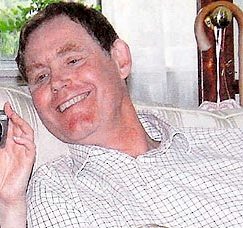
Guy Massey died 10 weeks after being diagnosed with variant CJD, the human form of mad cow's disease which his family believe he contracted after an eye operation years earlier
Variant CJD (vCID) is believed to be a human form of mad cow's disease and only affects a handful of people in the UK each year.
Mr Massey's family believe a cornea graft operation he had seven years ago at West Suffolk Hospital, Bury St Edmunds, might have brought on its development.
Ms Smith said he had the operation in 2001 and his family said it appeared to have been a success.
But she noticed last August he had started having problems with his memory and balance and on November 13 doctors at Addenbrooke's Hospital diagnosed him with vCJD.
Miss Smith said: "It is still such a shock that he contracted CJD. We think it must have been related to the eye operation as there is nothing else it could have been.
"It was a few years ago but then he suddenly started showing symptoms in August. We are told the main signs are staggering, a loss of short-term memory and a sweet tooth - and he had all three.
"But Guy never had any anger or was upset by what had happened. If it had been me, I would have been absolutely furious but he never had any complaints."
Angela, a medical secretary at Long Melford, said his medical cause of death was CJD and hypo-static pneumonia.
Mr Massey's heartbroken mother, Barbara, said he had fought the deadly disease with "great dignity and politeness".
"He was a wonderful son and very popular. He had more than 100 people at his funeral. We couldn't get any more in the church," she said
"Guy was wonderfully diverse and fairly outgoing, though not exuberant. It is something that never should have happened but there is absolutely no cure for CJD.
"His death was very sudden - the shock of him having basically mad cow's disease in human form was terrible. He was due to get married - it was all planned and it is so tragic."
A spokesman for West Suffolk Hospitals NHS Trust said: "We would like to offer our heartfelt sympathy to the family of Guy Massey for their loss. We are happy to discuss any concerns the family may have.
"We have checked our records and have received no complaints from the family in the last seven years. Cases of CJD are extremely rare in the UK.
"Generally speaking, people diagnosed with AIDS, cancer or CJD are not able to be donors, which reduces the risk of another person getting such diseases through a transplant."
A spokesman for the Health Protection Agency, which aims to protect people from infectious disease, said most cases of CJD have no known cause and that the iatrogenic strain, occurring accidentally through medical or surgical procedures, is very rare.
He said: "When any case of CJD is reported, the local health protection unit works closely with the National CJD Surveillance Unit which coordinates and decides of any further investigation of the circumstances of any possible cause of the patient's illness."
MAIL ONLINE
Family of CJD victim infected by contaminated blood slam health chiefs
by JAMES TOZER - Last updated at 22:00 08 December 2006
Cover up: Mark Buckland was infected with CJD from blood that was later discovered to be contaminated.

The family of a man killed by the human form of mad cow disease after being given infected blood yesterday slammed health chiefs who knew he was at risk but failed to tell him until he was dying.
When Mark Buckland started to become tired and weak, he was wrongly diagnosed with chronic fatigue syndrome because senior NHS officials decided to keep his exposure to variant CJD a secret.
It was only three years later when the 32-year-old became too ill to look after himself and began losing his memory that they finally told his family he had the incurable brain disease.
Now, as a result of his death, scientists have discovered that thousands more people could be exposed to vCJD through contaminated blood.
But his family are furious that he and 65 other patients who also received blood donated by people who later developed the terrifying degenerative condition were kept in the dark.
Yesterday his sister Gina, 35, said: "Mark spent the last three years of his life fighting to find a cure for a disease that he didn't actually have, and there were people who knew he didn't have it.
"We were told things like he might have committed suicide if he had known the truth, but he had a right to know he was going to die - he would have had the chance to do things like travel the world instead.
"They said they didn't want to make people panic, but instead they staged a cover-up, and that's even worse - it's devastated the whole family."
Their 58-year-old mother Eve added: "This research just shows they should have been more open all along - it's disgraceful."
Mr Buckland, a high-flying BT research engineer in Ipswich, had to be given 40 pints of blood when surgery for an intestinal complaint went wrong in 1997.
Unbeknown to anyone, just one pint was contaminated with variant Creutzfeldt-Jakob disease, the deadly degenerative brain disease spread by eating BSE-infected meat.
The donor who had given the blood died of vCJD in 2000, but at that point it was not known what the risk was of the recipient developing the disease.
As there was no test and no cure, a high-level Department of Health committee took the decision not to inform Mr Buckland or the other people who had received contaminated blood.
But because his own GP was not told either, when Mr Buckland - ironically a vegetarian since his teens - began showing symptoms in 2003, he was misdiagnosed with ME.
The following year he was told about his exposure, but according to his family he was told it was a "one in 1,000" risk and not anything to worry about.
By this time, Mr Buckland had had to give up work and was dedicating himself to a website supporting work towards a cure for ME.
But by January this year he was so ill he had to move in with his parents in Brighton.
As he began to lose his memory, officials finally contacted them to break the news that he had vCJD. He died in a hospice four months later.
At an inquest into his death, the coroner said Mr Buckland deserved to have been told the truth sooner.
Of the other 65 transfusion patients exposed to contaminated blood, two others are known to have developed vCJD.
Many have died from unrelated causes, leaving 24 who have now been given the facts but face an uncertain future as it is thought some carriers may never develop symptoms.
Yesterday, writing in The Lancet, Professor John Collinge, who investigated Mr Buckland's death, concluded that contaminated blood was an "efficient" route by which vCJD can be spread. He believes 14,000 people could be carrying vCJD without knowing it, and his research means they could infect many thousands more through contaminated surgical instruments.
Infection through blood donation is also likely to continue to happen despite precautions being introduced as there is no failsafe test for the disease.
Mr Buckland's 62-year-old father Peter said: "I still think if they had told him there's a chance he could have taken part in drug trials which just could have made a difference. I still feel he could be here now.
"But because of their decision he spent a lot of fruitless years setting up a website and researching an illness he didn't have. It was a complete and utter waste of time."
Read more:
http://www.dailymail.co.uk/news/article-421452/Family-CJD-victim-infected-contaminated-blood-slam-health-chiefs.html#ixzz0nvCFpuy5